

NAPLES, ITALY – Nov 20-24
Although Naples was really just a hub for us to see Pompeii, we enjoyed our couple days there. We arrived in the early evening and were greeted by our host Marco of Rainbow BnB. It’s a funky little hotel that feels more like a youth hostel. There are I believe 5 rooms on one floor of an old building. We had our own bathroom and mini-kitchen (two burners and a sink). There was also a communal full-kitchen where we would eat our complimentary breakfast (cereals, yogurt, pastries, coffee, etc).
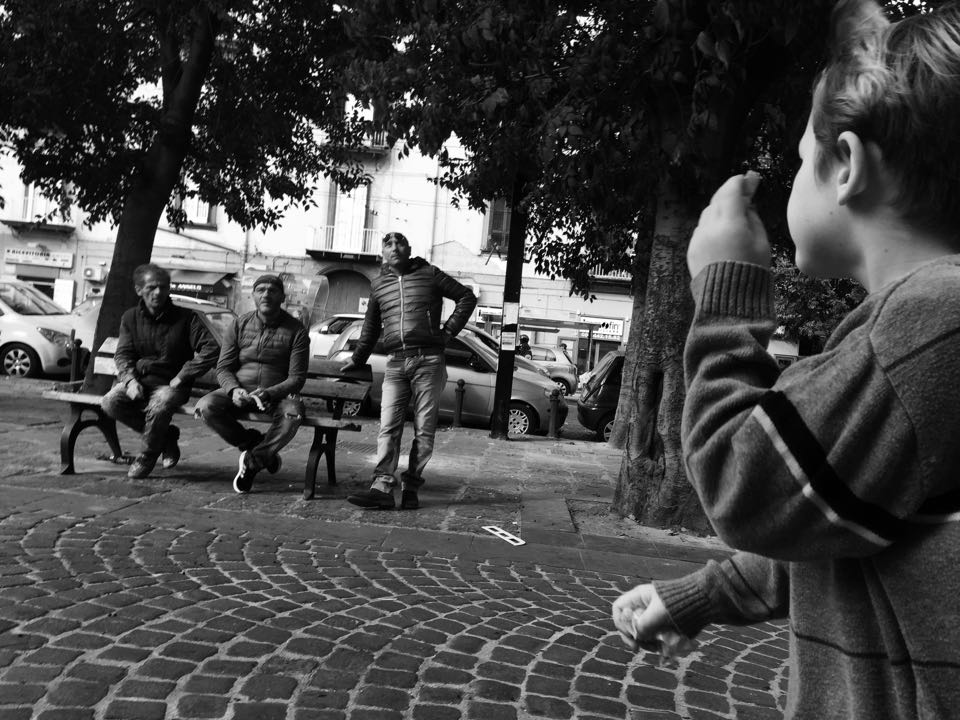
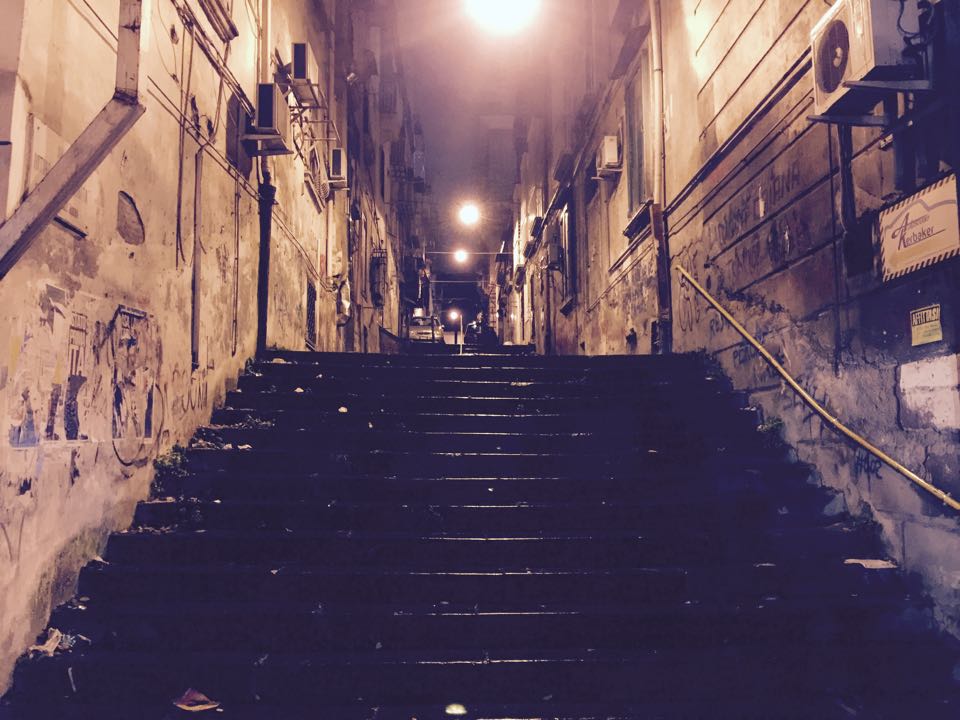
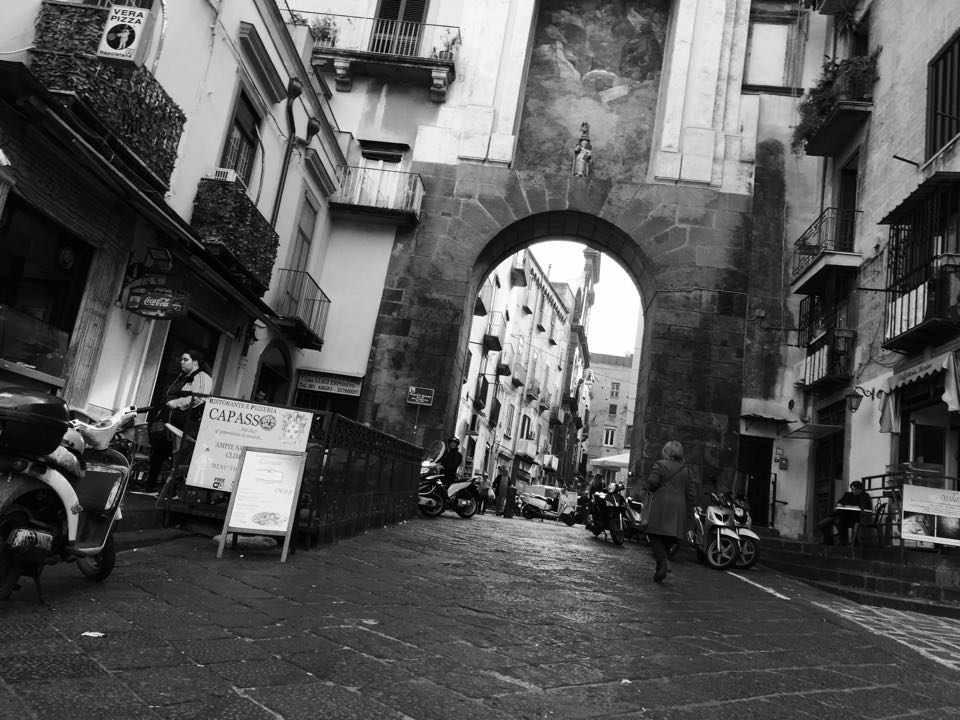
Our place was on a very busy and trendy street. Naples, at least the section we stayed in, was kind of ghetto. Trash in the streets, graffiti everywhere – not the ideal environment you imagine when planning a trip with your kids. But we always try to look on the bright side. And after getting past that first impression, you start to see the real personality of the city. After checking in, we took a walk on the main street in search of a supermarket. Friendly locals were quick to give us directions. There were kids playing soccer in the small square off the main street and others running around laughing. It was Friday night and the energy was in full force. We found our market and headed back to a nearby restaurant that Marco had recommended. We ordered pizza only because it’s typically the cheapest thing on the menu. Our gauge for a place is what they charge for a Margherita Pizza – usually around 5 euro. If it’s 9 or 10 we often move along. As always, the pizza was so delicious and we wondered if Italians even ate pizza when they visit the US because it just doesn’t come close to what they make.
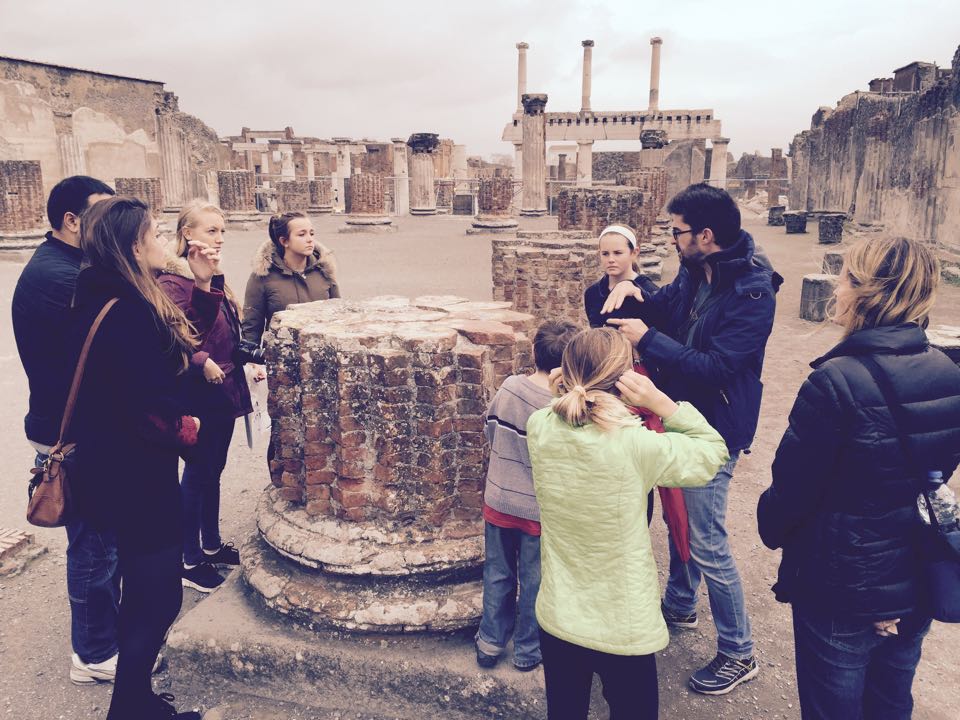
The next day we took a 40 min train to Pompeii. Tickets were about 25 euro for the family. Then we found a local guide at the entrance named Claudio. He charges 80 euro for a 2.5 hr tour in the off-season (120 in summer). He suggested we wait for other people to join so we could divide the cost. A British couple soon came along and we decided to head in. After about 10 mins two Dutch girls asked if they could join which made our price even cheaper.
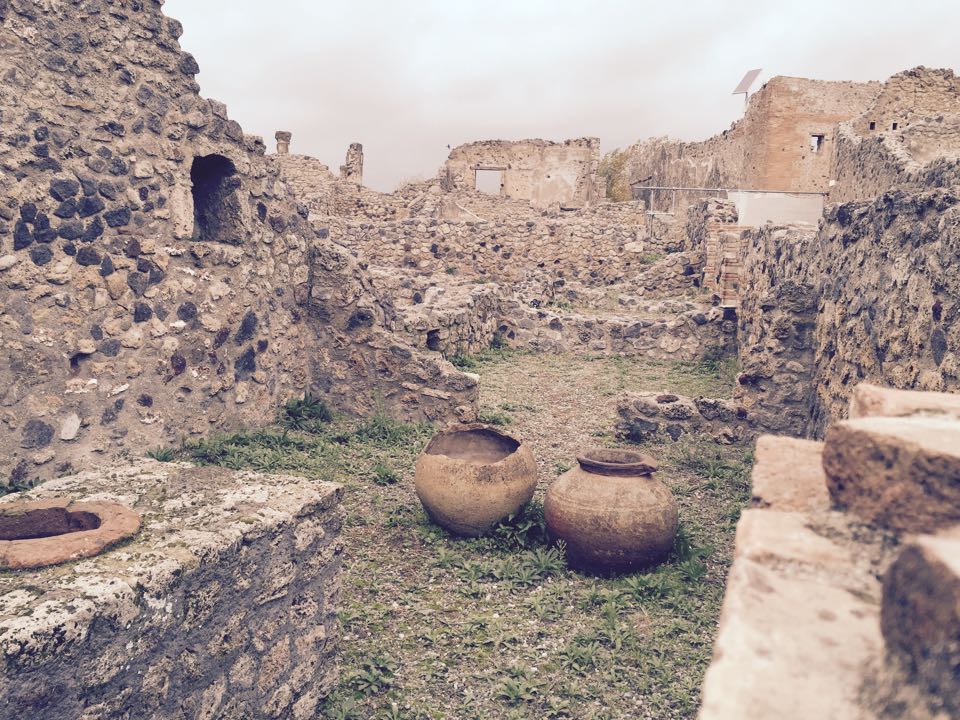
The brief story of Pompeii is that it was a small port city that was covered in ash by the nearby volcano Mt Vesuvius in the year 79 AD. What’s important to understand that there was no lava as many people think. The volcano literally exploded and all the ash covered the city, suffocating the people. No one really knew much about this until in the 1700s when the city was discovered during diggings. Since that time, archaeologists have been slowly uncovering the city. Most of it was in very good condition although some was damaged in an earthquake that occurred prior to the eruption. And other parts were damaged during WWII. They have estimated that 30% of Pompeii is still covered up. When people think of Pompeii, they usually think about the human molds that were discovered. Basically, people and pets were covered in ash, suffocated and died. The ash compacted and over time, the bodies deteriorated leaving a hollow ‘mold’ of their shape. Scientists figured out how to inject these molds with plaster and when opened they had human forms of people laying down, crouching, etc. Many of these forms are now in various museums and only a few remain at Pompeii.

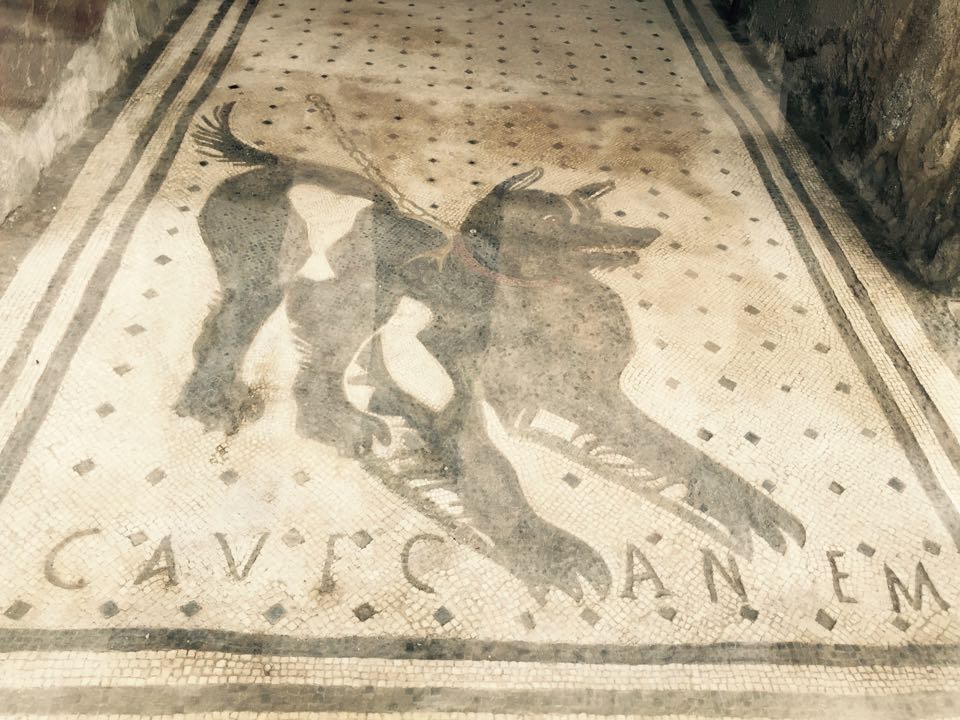
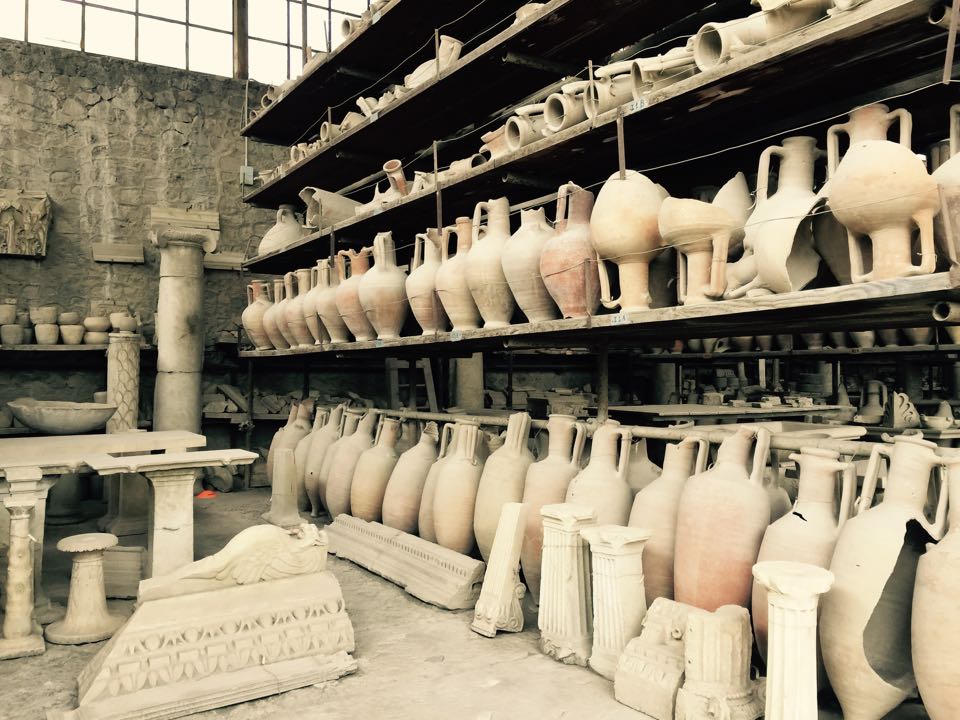
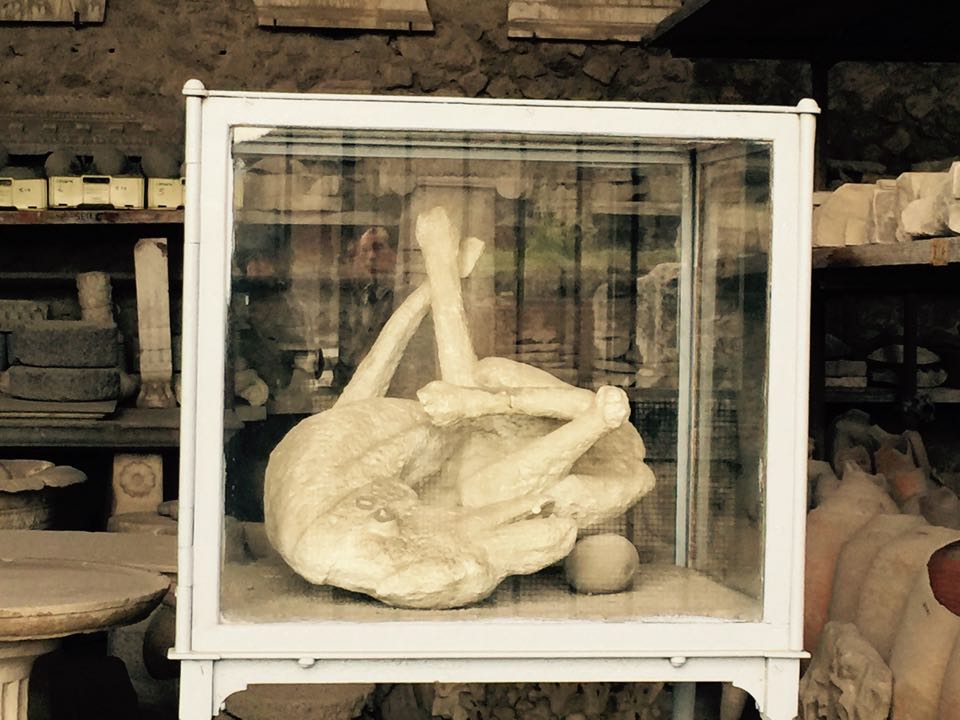

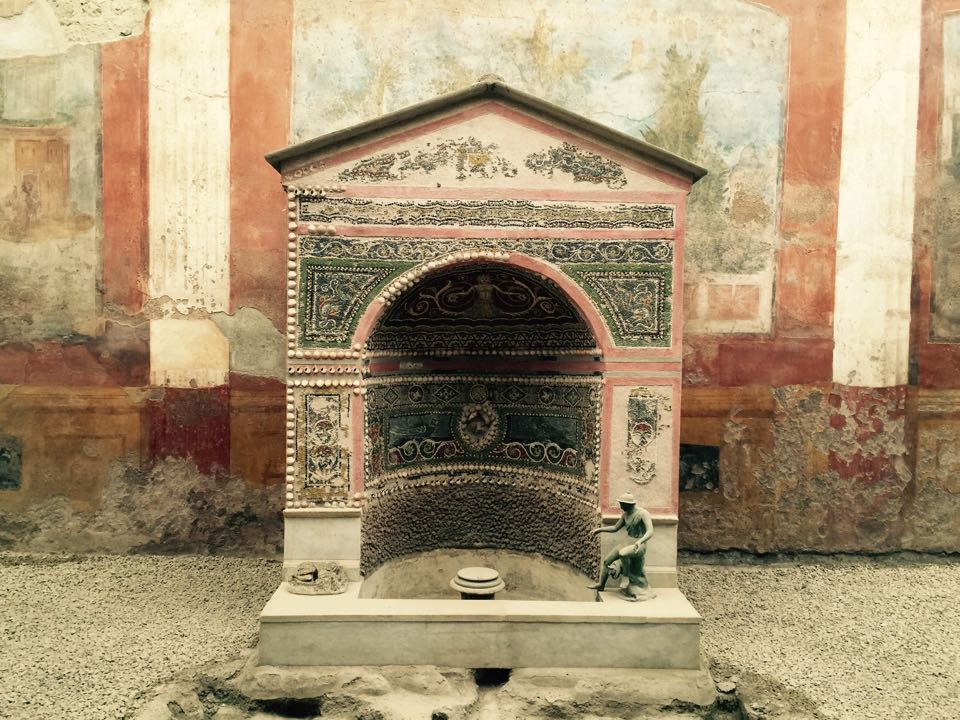
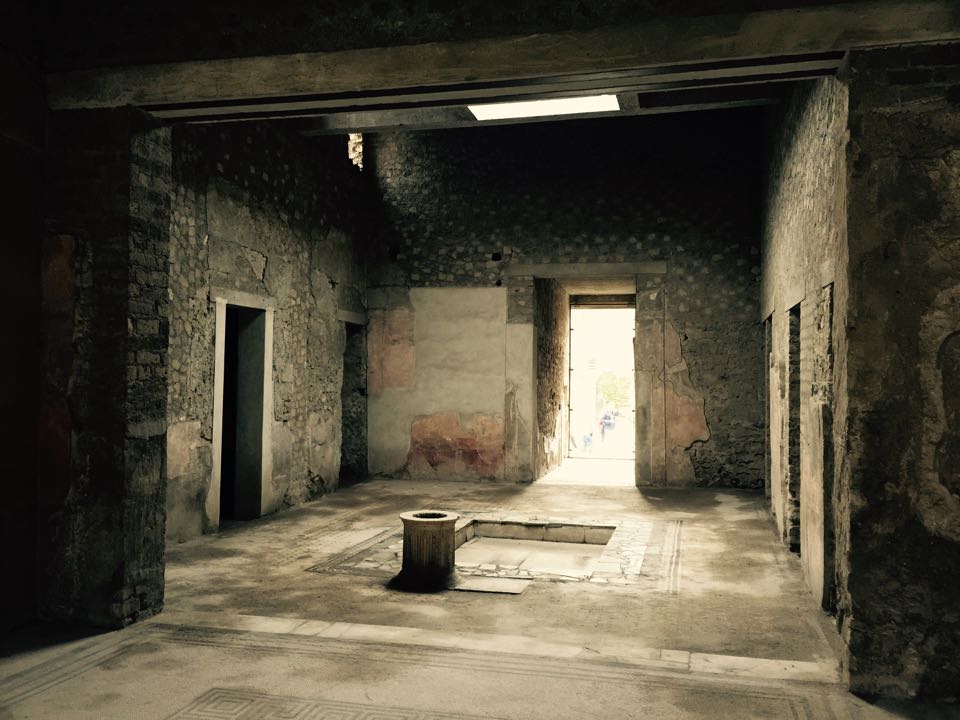
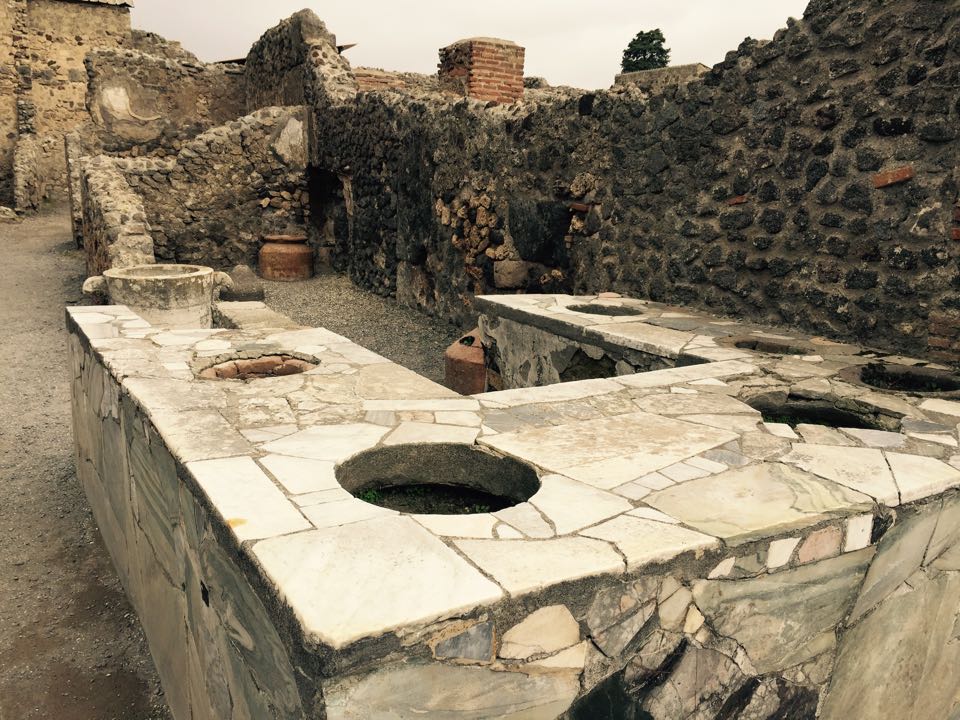
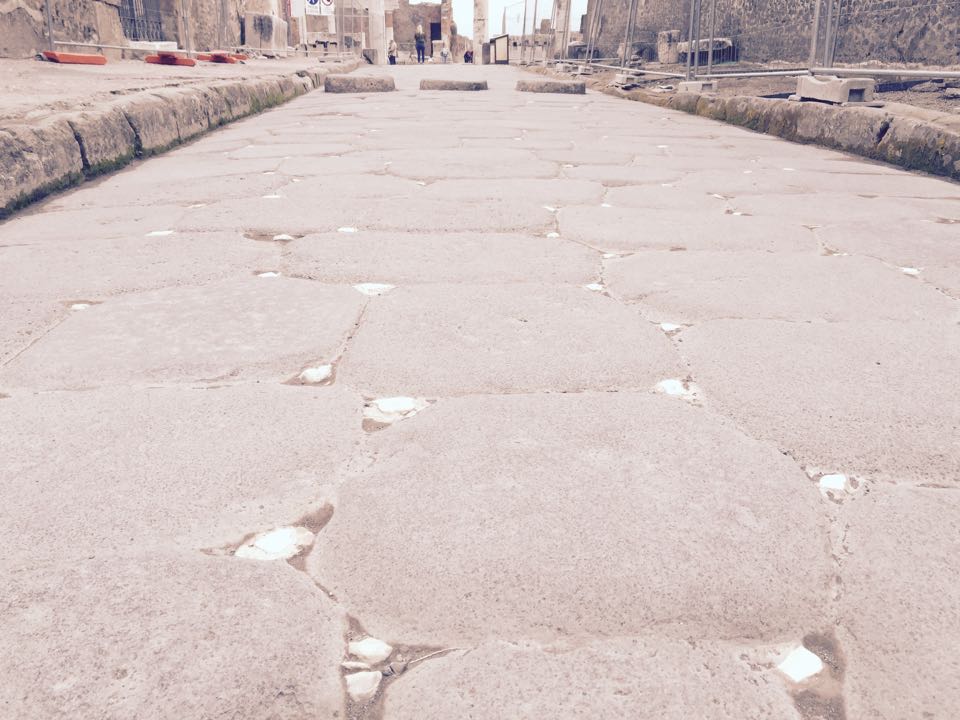
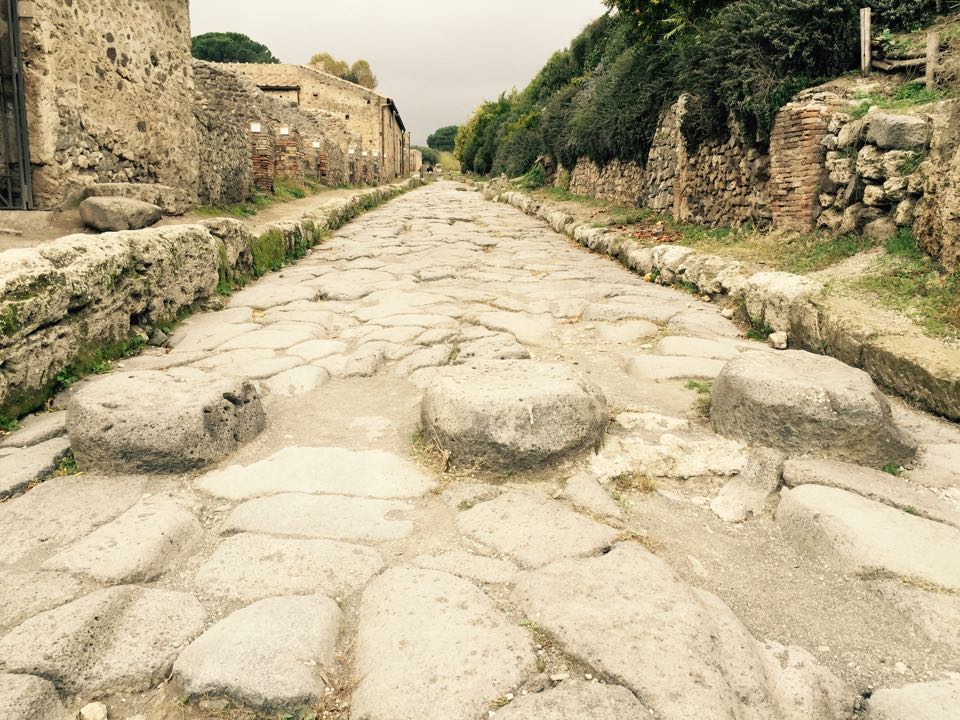
What was so special about our tour with Claudio was that he explained the history of Pompeii prior to the eruption. We got to walk the streets, see the various markets and bakeries, their government buildings and learn about their way of life. We went into several homes, all of which have an opening above the front room which was for collecting rain water as well as allowing light in. Also, on the floors of many homes as well as in the streets are tiny diamond shaped pieces of marble called Cat’s Eyes that would reflect the moonlight so they could see the streets/floors better. Another interesting thing about the streets was that they are recessed and have 3 large stones going across every so often. This was because they didn’t have a proper sewage system so the waste would flow down the streets and people could cross using these large stones. Nice. Pompeii is definitely worth visiting and if you do, we highly recommend getting a guide. There are official, city authorized guides at the entrance. Claudio really helped tell the complete story of this ancient civilization. We would have missed some much of this had we done it by ourselves.
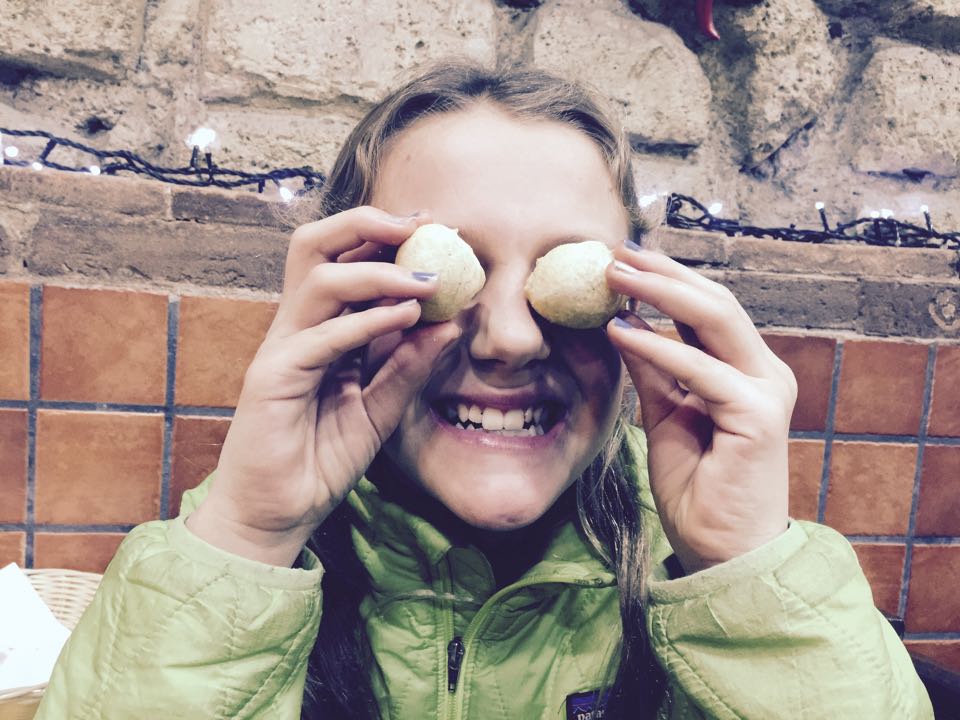
Back in Naples, Marco recommended another local joint, Cucina di Mamma – Mamma’s Kitchen, ‘nuff said. We decided to get pasta as well as pizza and these dough balls they’re famous for. Unfortunately, we had some communication issues and ordered two dishes that had cream based sauces so they were super heavy. But on the bright side, the wine glasses were twice the size of normal and the meal was ridiculously cheap.


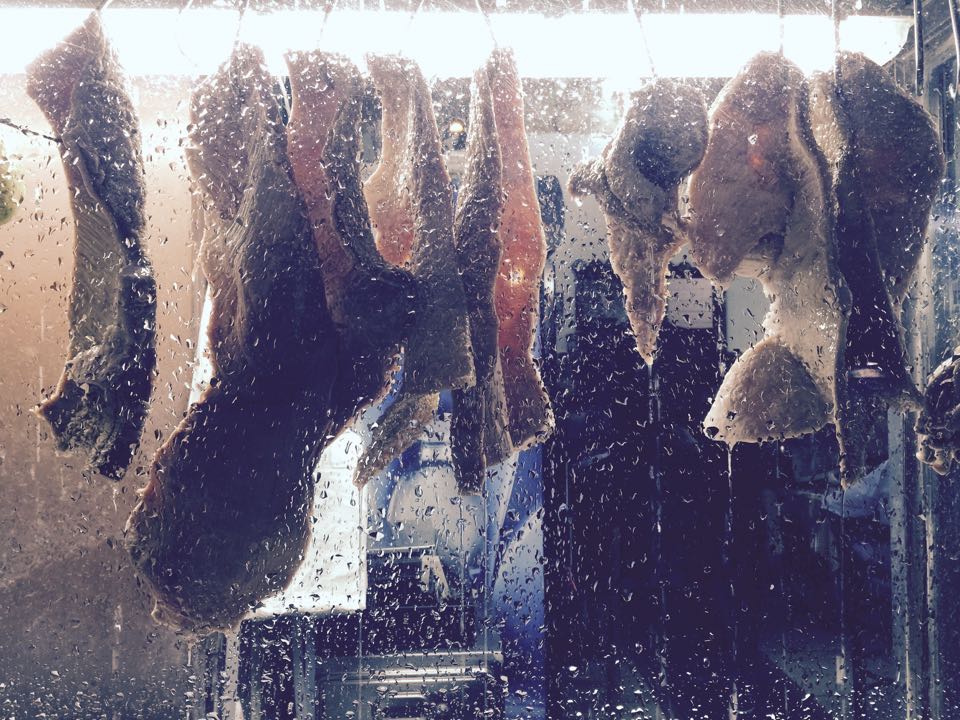
On our way home from dinner we stopped at a local Triperia – as in Tripe as in cow stomach. As we were looking at the tripe in the front case, a guy came out and started cutting pieces of pig’s feet and offering them to us to try. I had grown up eating my grandma’s pickled pig’s feet on the farm so I encouraged the family to give it a try. They reluctantly did and were quite surprised at how good they were.
At the Naples train station they had a giant snail sculpture out front. We thought this was funny because they promote high-speed trains yet have an icon for slow at the entrance. Our train ride to Cinque Terre was completely full – a first for our trip. So we had to hang out in-between the train cars until people started getting off. Always an adventure.


 Stivers Tribe